Our Integrated Operating Model
Built around five connected actions: identify, structure, partner, plan and govern — moving opportunities from early review to disciplined execution.
Five Connected Actions
The Royal Oaks model is built around five connected actions. Each action produces information and decisions required by the next, while allowing the opportunity to be reassessed as evidence improves.

Identify
Screen land against location, access, surrounding growth, potential demand, preliminary constraints and stakeholder readiness. We establish the opportunity boundary and filter information gaps early.

Structure
Explore purchase, joint venture, revenue share, development management or phased arrangements according to the parties' objectives and risk appetite. Determining how value, responsibility and risk may be shared.

Partner
Match the opportunity with a housing brand, developer, investor or specialist team suited to the product, scale and maturity of the project. Strategic fit is evaluated alongside reputation and commercial appetite.
Plan
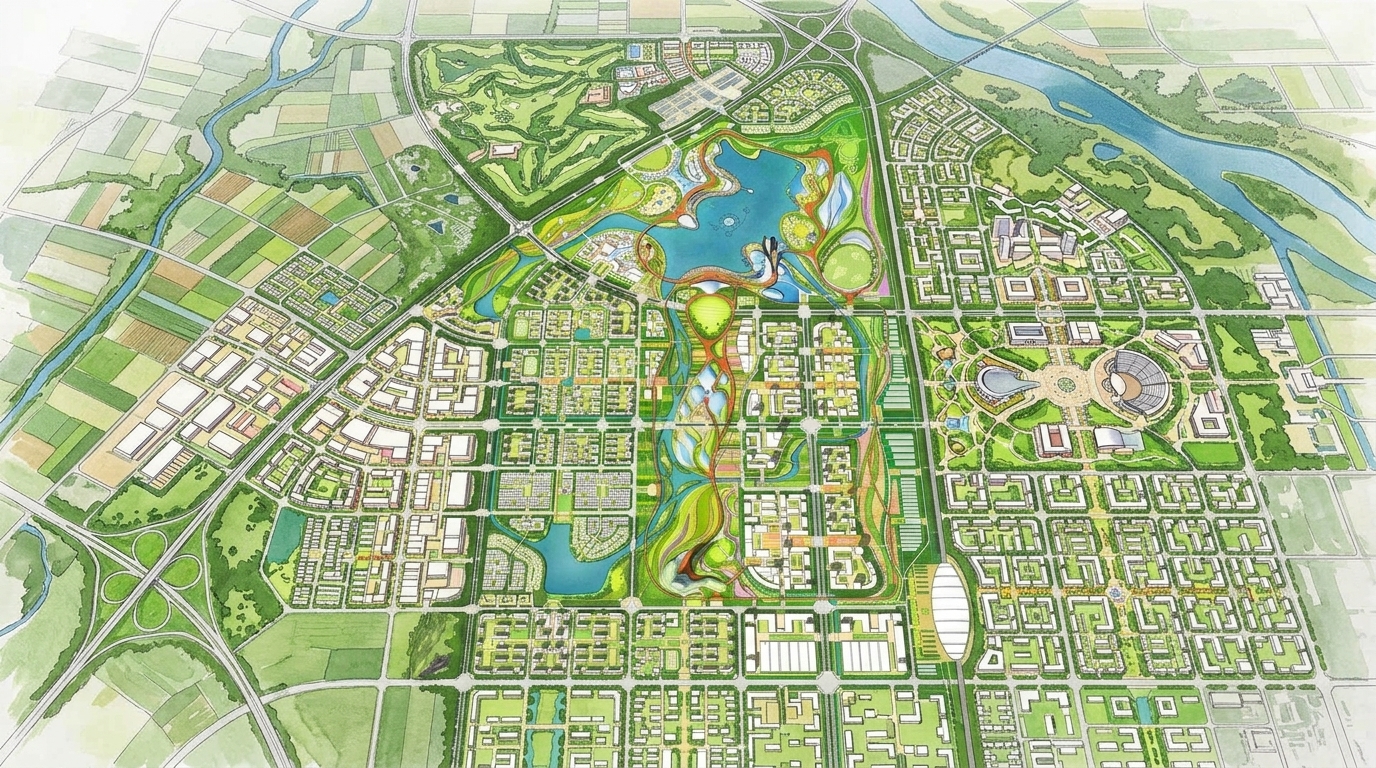
Coordinate the concept, land use, phasing, approvals pathway and infrastructure interfaces with appointed professionals. Planning translates the proposition into a spatial and phased development concept that is commercially grounded.

Govern
Maintain decision logs, milestones, reporting, risk ownership and escalation so the programme remains visible and controlled. Governance gives the programme a reliable operating rhythm connecting every workstream.
How the Workstreams Connect
Land strategy establishes the opportunity boundary. Commercial structuring determines how value, responsibility and risk may be shared.
Planning translates the proposition into a spatial and phased development concept. Infrastructure planning tests whether access and utilities can support that concept.
Governance connects every workstream, ensuring decisions are evidence-based, responsibilities are clear, and risks are visible.